The Movie Where Tim Allen Accidentally Kills Santa—And It’s Fine
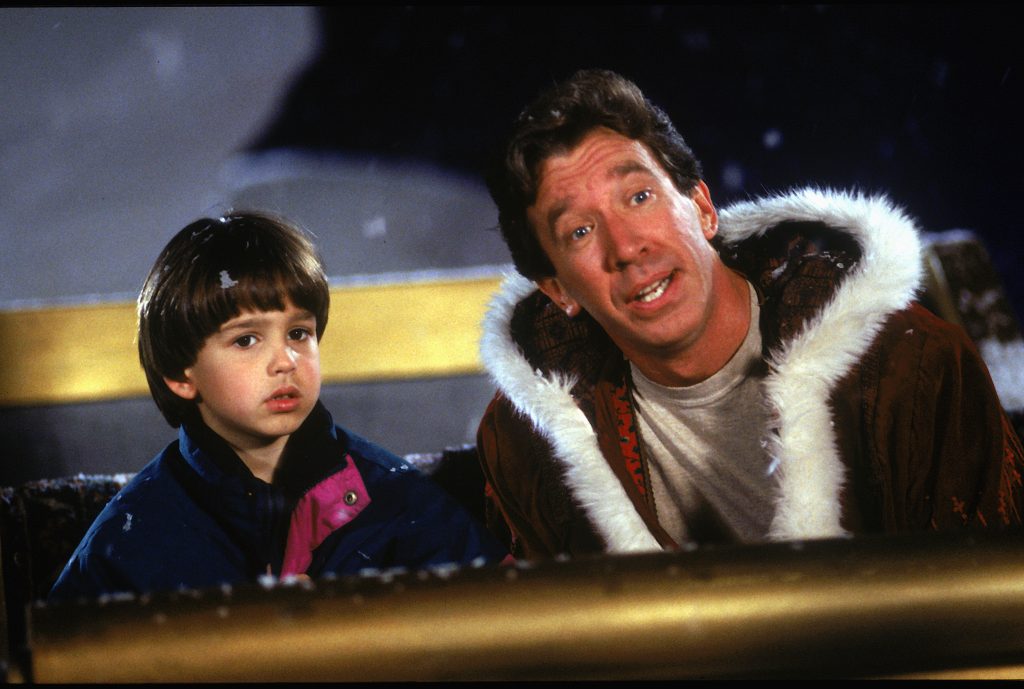
A Surprisingly Sweet, Slightly Unhinged Look Back at The Santa Clause (1994)
Let’s address the reindeer on the roof right away: The Santa Clause (1994) begins with a man accidentally causing Santa Claus to fall off a house and die. And the movie just… keeps going. No sirens. No investigation. Just a legal fine print loophole that says, “Congrats, you’re Santa now.” And somehow—against all logic, sanity, and OSHA regulations—it totally works. This movie is wild, heartfelt, weirdly existential, and peak mid-’90s Disney energy wrapped in Christmas tinsel.
Tim Allen plays Scott Calvin, a divorced dad whose life is already slightly off-kilter before Santa takes a fatal tumble off his roof. Scott is sarcastic, distracted, and trying his best—but also clearly not nailing the whole “present father” thing. His relationship with his son Charlie is loving but strained, and that emotional gap is what grounds the movie before it launches into full North Pole chaos. That’s one of the reasons this movie sticks. Beneath the absurd premise, there’s a real story about belief, responsibility, and growing into something you didn’t plan to be.
The turning point—Scott putting on Santa’s suit and discovering the “Santa Clause” fine print—is still one of the most bizarrely clever holiday concepts ever put on screen. The idea that Santa operates under an actual contractual obligation is both hilarious and deeply corporate in a very ’90s way. This isn’t magic you inherit because you’re special. This is magic you inherit because you didn’t read the terms and conditions. Honestly, relatable.
As Scott slowly transforms into Santa—white beard, round belly, red suit permanently bonded to his body—the movie leans hard into body-horror-for-kids territory, and I mean that as a compliment. The weight gain. The beard regrowth. The sudden inability to shave. It’s played for laughs, but there’s something unsettling under the humor that makes it weirdly fascinating. Scott is losing control of his identity, and the movie doesn’t completely gloss over that. He’s confused. He’s frustrated. He’s terrified. And everyone around him thinks he’s losing his mind.
Which brings us to one of the movie’s most underrated strengths: how seriously it takes the idea of belief. Scott doesn’t just stop believing in Santa—he becomes someone no one else believes. His ex-wife and her new partner genuinely think he’s having a breakdown. His career is at risk. His sanity is questioned. And yet, through Charlie—who believes with his whole heart—the magic persists. It’s a surprisingly effective emotional anchor for a movie that also includes an elf named Bernard with attitude.
Speaking of the North Pole, the elves are pure ’90s chaos in the best way. They skateboard. They sass adults. They run the operation like a highly efficient toy startup. Bernard, especially, feels like he walked straight out of a teen sitcom and into a Christmas movie—and somehow fits perfectly. The North Pole itself is colorful, busy, and brimming with that era’s “theme park attraction” aesthetic. You can practically smell the plastic snow.
By the time Scott finally accepts his role as Santa—not just the suit, but the responsibility—it feels earned. This isn’t about becoming magical. It’s about becoming reliable. Becoming present. Becoming someone his son can look up to. And when Scott shows up at the end as Santa not just for Charlie, but for everyone, it hits that warm, emotional sweet spot holiday movies live for.
Rewatching The Santa Clause now, it’s easy to see why it became such a staple. It’s funny without being cruel, emotional without being syrupy, and weird without apologizing for itself. It asks you to accept an absolutely ridiculous premise and then rewards you for doing so with genuine heart.
So yes—this is the movie where Tim Allen accidentally kills Santa Claus… and it’s fine. Because what comes after is a story about belief, fatherhood, and finding purpose where you least expect it. And honestly? That feels pretty Christmassy to me.